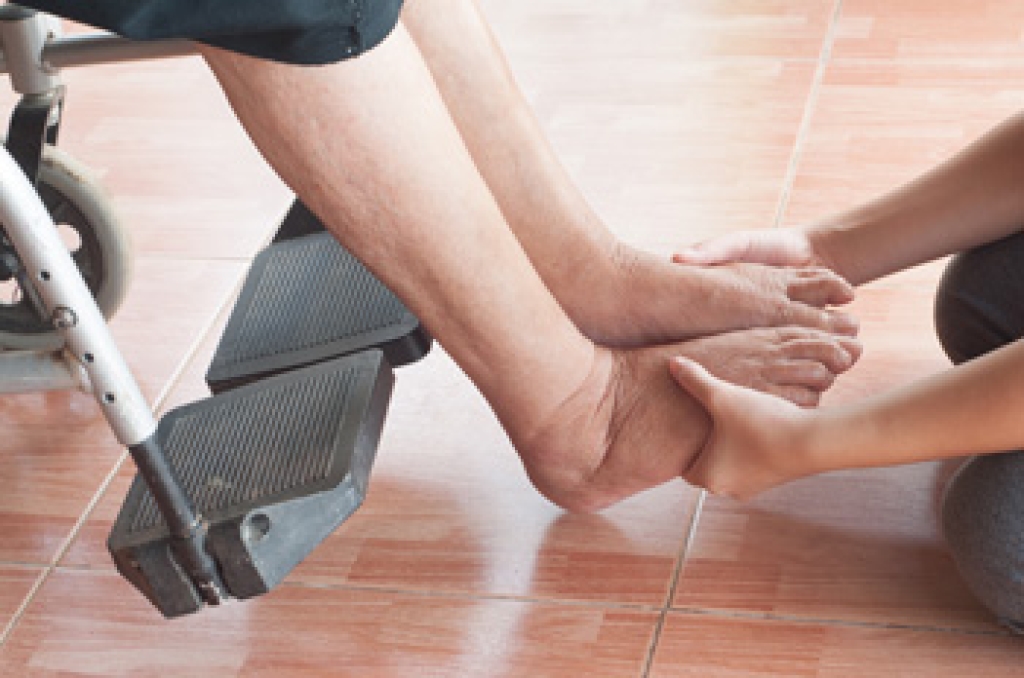
Elderly Foot Care and Strokes

As an individual ages and becomes a senior citizen, they could be at risk of experiencing a stroke of some sort. Suffering from a stroke can have many different effects to be aware of. For example, one common symptom of having a stroke involves foot drop. Stroke survivors with foot drop essentially have a difficult time raising their foot because of the weakness in the muscles that are normally responsible for lifting it. As a result of living with foot drop, a senior might experience slowness when walking or even potentially pain. After walking a short distance, an individual with foot drop can also experience fatigue. If you are someone who has endured a stroke, then it is suggested that you schedule an appointment with a podiatrist. This foot specialist can help you address any issues you might be having with your feet. You can schedule an appointment with a trusted podiatrist today to address your foot problems.

Proper foot care is something many older adults forget to consider. If you have any concerns about your feet and ankles, contact one of our podiatrists from APEX Foot & Ankle Center. Our doctors can provide the care you need to keep you pain-free and on your feet.

The Elderly and Their Feet

As we age we start to notice many changes in our body, but the elder population may not notice them right away. Medical conditions may prevent the elderly to take notice of their foot health right away. Poor vision is a lead contributor to not taking action for the elderly.

Common Conditions 

  • Neuropathy – can reduce feeling in the feet and can hide many life-threatening medical conditions.
  • Reduced flexibility – prevents the ability of proper toenail trimming, and foot cleaning. If left untreated, it may lead to further medical issues.
  • Foot sores – amongst the older population can be serious before they are discovered. Some of the problematic conditions they may face are:
  • Gouging toenails affecting nearby toe
  • Shoes that don’t fit properly
  • Pressure sores
  • Loss of circulation in legs & feet
  • Edema & swelling of feet and ankles

Susceptible Infections

Diabetes and poor circulation can cause general loss of sensitivity over the years, turning a simple cut into a serious issue.

If you have any questions, please feel free to contact our offices located in Fort Myers, Shellpoint, and Naples, FL . We offer the newest diagnostic and treatment technologies for all your foot care needs.
Read more about Elderly Foot Care

Causes of Blisters on the Feet

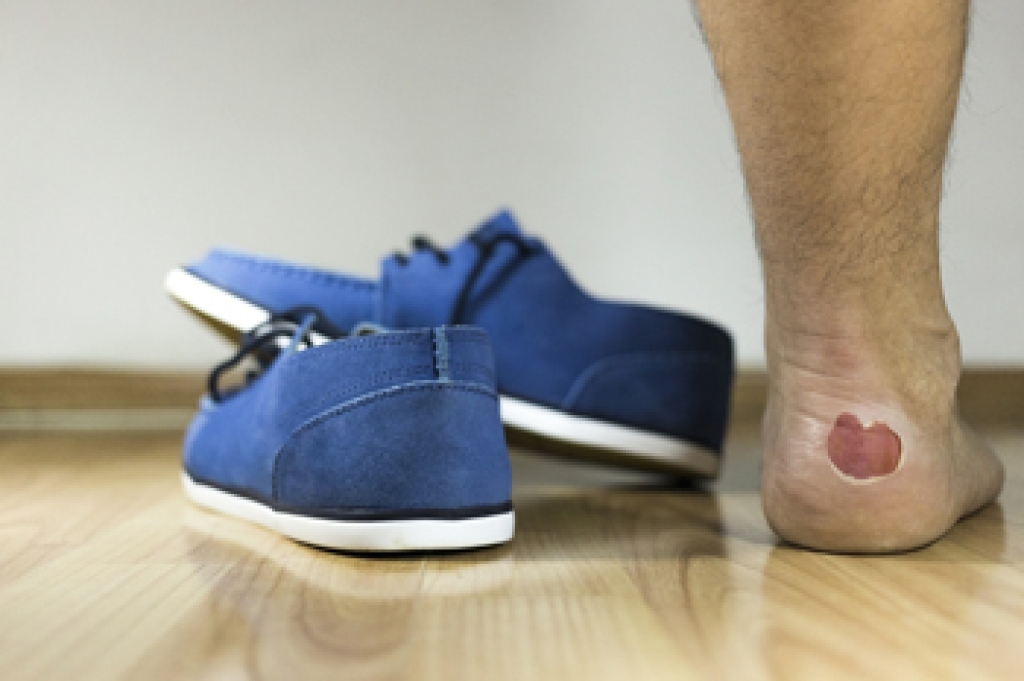
Blisters are a natural method the body uses to heal areas of damaged skin. They form as a result of excess friction that is generally caused by shoes or socks that do not fit correctly. They are defined as a small formation that resembles a bubble and is filled with serum that protects the raw skin. Blisters are common among runners, as a result of the consistent rubbing of the shoe against the heels and toes. The beginning symptoms of a blister will generally be a reddened area, and the skin may tear. There may be medical reasons why blisters form. These can consist of eczema, psoriasis, or contact dermatitis. An allergic reaction to an insect bite may also cause a blister to form, in addition to first-degree burns. It is beneficial to avoid popping the blister prematurely. It will gradually drain when new skin has formed. If you are prone to getting blisters on your feet, it is suggested that you speak with a podiatrist who can help you with effective prevention methods.

Blisters may appear as a single bubble or in a cluster. They can cause a lot of pain and may be filled with pus, blood, or watery serum. If your feet are hurting, contact one of our podiatrists of APEX Foot & Ankle Center. Our doctors can provide the care you need to keep you pain-free and on your feet.

Foot Blisters

Foot blisters are often the result of friction. This happens due to the constant rubbing from shoes, which can lead to pain.

What Are Foot Blisters?

A foot blister is a small fluid-filled pocket that forms on the upper-most layer of the skin. Blisters are filled with clear fluid and can lead to blood drainage or pus if the area becomes infected.

Symptoms

(Blister symptoms may vary depending on what is causing them)

  • Bubble of skin filled with fluid
  • Redness
  • Moderate to severe pain
  • Itching

Prevention & Treatment

In order to prevent blisters, you should be sure to wear comfortable shoes with socks that cushion your feet and absorb sweat. Breaking a blister open may increase your chances of developing an infection. However, if your blister breaks, you should wash the area with soap and water immediately and then apply a bandage to the affected area. If your blisters cause severe pain it is important that you call your podiatrist right away.

If you have any questions, please feel free to contact our offices located in Fort Myers, Shellpoint, and Naples, FL . We offer the newest diagnostic and treatment technologies for all your foot care needs.

Read more about Blisters

Stretches for Flat Feet

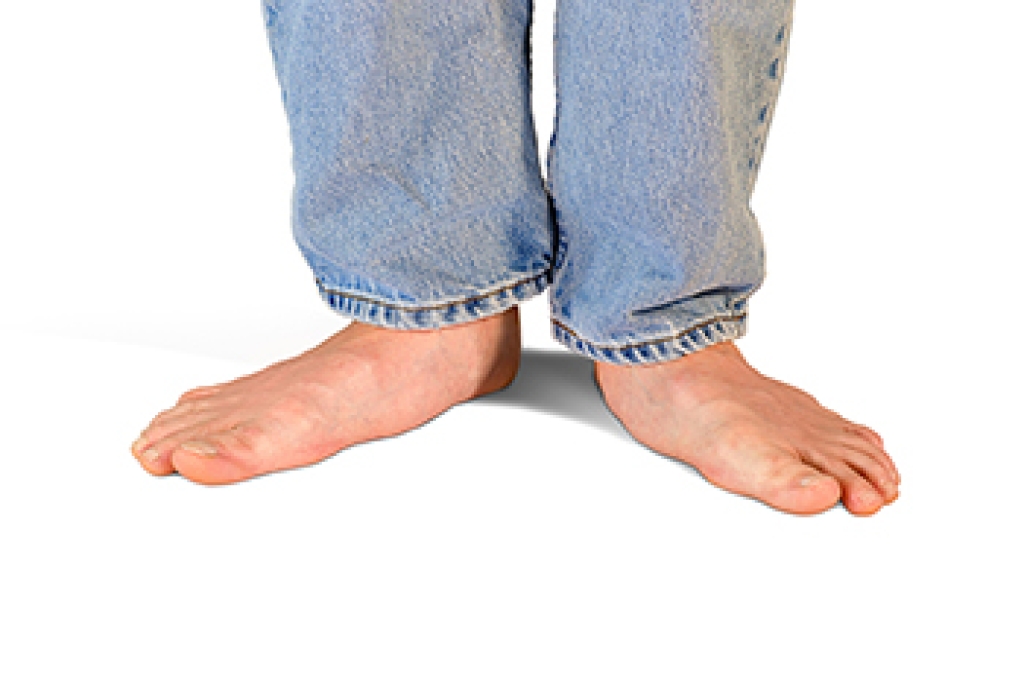
Collapsed arches are another name for flat feet. It is a condition that most babies are born with, and the aches generally develop during the teenage years. There may be existing conditions that can prevent the arch from forming, including obesity, pregnancy, and arthritis. Flat feet are an abnormal foot structure, and many people with this condition have aches and foot pain. When specific stretches are performed several times per week, that arch may develop and become stronger. A heel stretch can be beneficial. This can be done by standing and resting the hands on a chair while keeping both heels on the floor. As the front leg is bent while rocking back and forth, a gentle stretch can be found in the back leg. After holding the position for several seconds, this stretch can be repeated on the other leg. Rolling the foot on a tennis ball may help to improve the arch and can be performed for up to three minutes on each foot. If you have flat feet, it is suggested that you are under the care of a podiatrist who can help you to manage this condition.

Flatfoot is a condition many people suffer from. If you have flat feet, contact one of our podiatrists from APEX Foot & Ankle Center. Our doctors will treat your foot and ankle needs.

What Are Flat Feet?

Flatfoot is a condition in which the arch of the foot is depressed and the sole of the foot is almost completely in contact with the ground. About 20-30% of the population generally has flat feet because their arches never formed during growth.

Conditions & Problems:

Having flat feet makes it difficult to run or walk because of the stress placed on the ankles.

Alignment – The general alignment of your legs can be disrupted, because the ankles move inward which can cause major discomfort.

Knees – If you have complications with your knees, flat feet can be a contributor to arthritis in that area.  

Symptoms

  • Pain around the heel or arch area
  • Trouble standing on the tip toe
  • Swelling around the inside of the ankle
  • Flat look to one or both feet
  • Having your shoes feel uneven when worn

Treatment

If you are experiencing pain and stress on the foot you may weaken the posterior tibial tendon, which runs around the inside of the ankle. 

If you have any questions, please feel free to contact our offices located in Fort Myers, Shellpoint, and Naples, FL . We offer the newest diagnostic and treatment technologies for all your foot care needs.
Read more about Flat Feet

It's Time for Beautiful Feet

You don't need an excuse to have beautiful nails. Step outside without worrying about the appearance of your feet.

A Bunionette Is Known as a Tailor’s Bunion

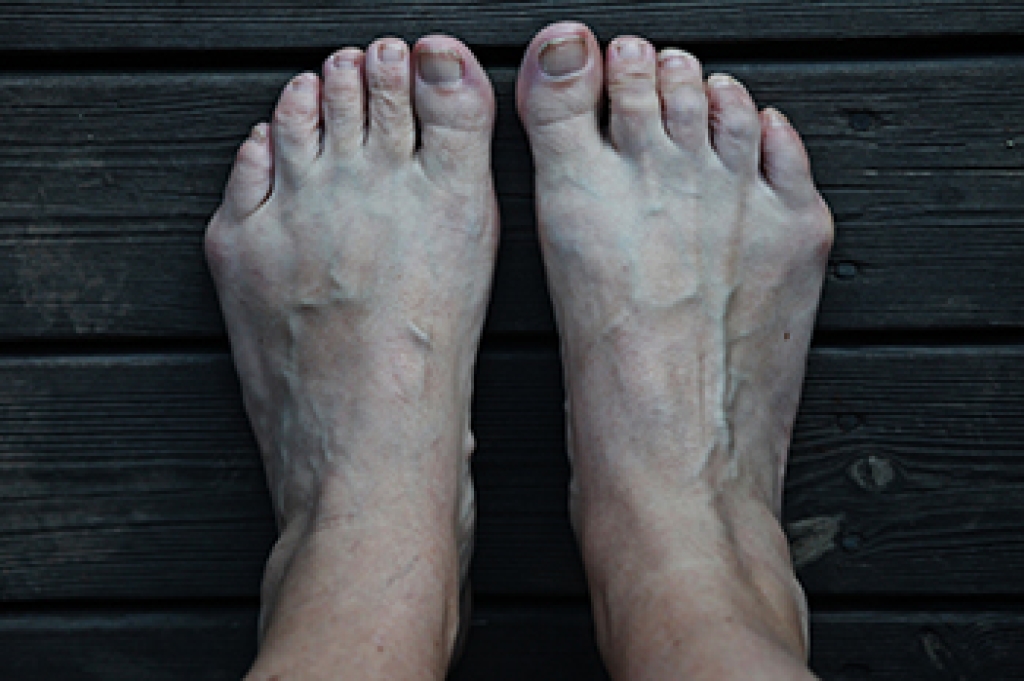
A small bunion that forms on the side of the pinky toe is called a bunionette. Many people refer to this as a tailor’s bunion, and it occurs when the bottom bone on the pinky toe shifts or becomes larger. This name originated hundreds of years ago when tailors would work with their legs crossed, causing the pinky toes to touch the ground. This would cause a small bump to form on the base of the little toe. It often rubs against the shoe, causing pain and discomfort. A common reason for a tailor’s bunion to develop is from wearing shoes that do not fit correctly. Additionally, loose ligaments, tight calf muscles, or a foot that leans to the outside may be causes for a tailor’s bunion to form. Temporary relief may come from choosing shoes with adequate room in the toe area and wearing a protective pad over the bunion. If you have this condition, it is suggested that you confer with a podiatrist who can provide you with permanent relief, which may include minor surgery for removal.

If you are suffering from bunion pain, contact one of our podiatrists of APEX Foot & Ankle Center. Our doctors can provide the care you need to keep you pain-free and on your feet.

What Is a Bunion?

Bunions are painful bony bumps that usually develop on the inside of the foot at the joint of the big toe. As the deformity increases over time, it may become painful to walk and wear shoes. Women are more likely to exacerbate existing bunions since they often wear tight, narrow shoes that shift their toes together. Bunion pain can be relieved by wearing wider shoes with enough room for the toes.

Causes

  • Genetics – some people inherit feet that are more prone to bunion development
  • Inflammatory Conditions - rheumatoid arthritis and polio may cause bunion development

Symptoms

  • Redness and inflammation
  • Pain and tenderness
  • Callus or corns on the bump
  • Restricted motion in the big toe

In order to diagnose your bunion, your podiatrist may ask about your medical history, symptoms, and general health. Your doctor might also order an x-ray to take a closer look at your feet. Nonsurgical treatment options include orthotics, padding, icing, changes in footwear, and medication. If nonsurgical treatments don’t alleviate your bunion pain, surgery may be necessary.

If you have any questions, please feel free to contact our offices located in Fort Myers, Shellpoint, and Naples, FL . We offer the newest diagnostic and treatment technologies for all your foot care needs.
Read more about Bunions

Morton’s Neuroma Symptoms

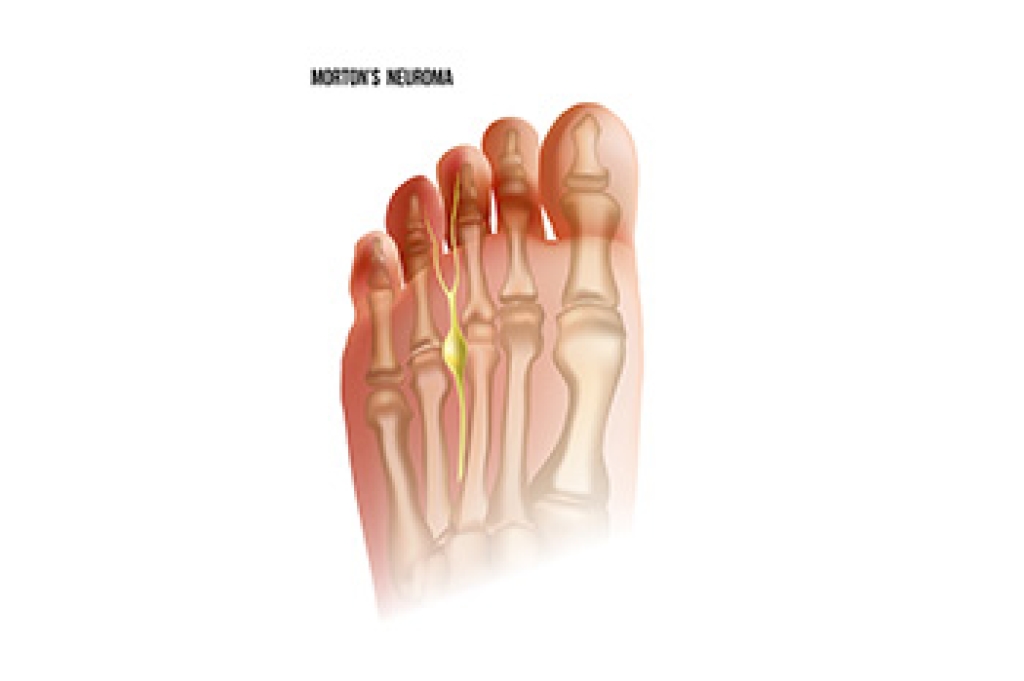
Morton’s neuroma is one particular kind of affliction of the foot that negatively impacts the health of one’s feet. Specifically, Morton’s neuroma develops when the tissue surrounding a nerve in the toes of the feet becomes thickened. As a result, pain may ensue. In fact, the primary symptom that is associated with this condition is actually pain and feelings of discomfort. Interestingly, the pain associated with this condition is not always consistent in duration. For example, sometimes the pain from Morton’s Neuroma may be intermittent. This specific kind of pain is sometimes described as comparable to standing on a marble. As a consequence of the pain, the toes might even begin to feel tingly or numb. If you are someone that has Morton’s neuroma and wants to address the pain, it is suggested that you contact a podiatrist today for treatment and assistance. 

Morton’s neuroma is a very uncomfortable condition to live with. If you think you have Morton’s neuroma, contact one of our podiatrists of APEX Foot & Ankle Center. Our doctors will attend to all of your foot care needs and answer any of your related questions.  

Morton’s Neuroma

Morton's neuroma is a painful foot condition that commonly affects the areas between the second and third or third and fourth toe, although other areas of the foot are also susceptible. Morton’s neuroma is caused by an inflamed nerve in the foot that is being squeezed and aggravated by surrounding bones.

What Increases the Chances of Having Morton’s Neuroma?

  • Ill-fitting high heels or shoes that add pressure to the toe or foot
  • Jogging, running or any sport that involves constant impact to the foot
  • Flat feet, bunions, and any other foot deformities

Morton’s neuroma is a very treatable condition. Orthotics and shoe inserts can often be used to alleviate the pain on the forefront of the feet. In more severe cases, corticosteroids can also be prescribed. In order to figure out the best treatment for your neuroma, it’s recommended to seek the care of a podiatrist who can diagnose your condition and provide different treatment options.

If you have any questions, please feel free to contact our offices located in Fort Myers, Shellpoint, and Naples, FL . We offer the newest diagnostic and treatment technologies for all your foot care needs.
Read more about Morton's Neuroma

Causes of an Ingrown Toenail

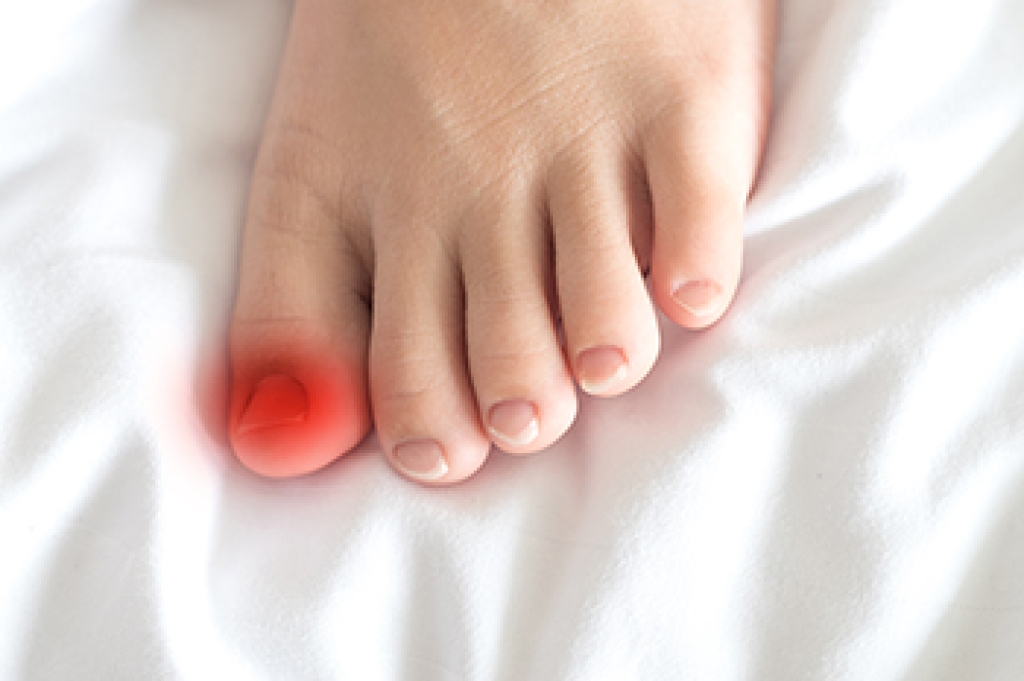
The painful foot condition that is known as an ingrown toenail can happen from wearing shoes that are too tight. It may also occur from improperly trimming the toenails, or possibly if it tends to run in families. An ingrown toenail generally affects the big toe, and is noticeable as the nail grows into the skin instead of over it. Symptoms can include swelling, redness, and it may become infected. Some patients find temporary relief as they soak their feet in warm water, followed by gently pulling the skin away from the nail. An ingrown toenail will generally produce pain and discomfort, and there is no mistaking what it is from. If you have developed an ingrown toenail, it is suggested that you are under the care of a podiatrist who can properly assess and treat this condition.

Ingrown toenails can become painful if they are not treated properly. For more information about ingrown toenails, contact one of our podiatrists of APEX Foot & Ankle Center. Our doctors can provide the care you need to keep you pain-free and on your feet.

Ingrown Toenails

Ingrown toenails occur when a toenail grows sideways into the bed of the nail, causing pain, swelling, and possibly infection.

Causes

  • Bacterial infections
  • Improper nail cutting such as cutting it too short or not straight across
  • Trauma to the toe, such as stubbing, which causes the nail to grow back irregularly
  • Ill-fitting shoes that bunch the toes too close together
  • Genetic predisposition

Prevention

Because ingrown toenails are not something found outside of shoe-wearing cultures, going barefoot as often as possible will decrease the likeliness of developing ingrown toenails. Wearing proper fitting shoes and using proper cutting techniques will also help decrease your risk of developing ingrown toenails.

Treatment

Ingrown toenails are a very treatable foot condition. In minor cases, soaking the affected area in salt or antibacterial soaps will not only help with the ingrown nail itself, but also help prevent any infections from occurring. In more severe cases, surgery is an option. In either case, speaking to your podiatrist about this condition will help you get a better understanding of specific treatment options that are right for you.

If you have any questions, please feel free to contact our offices located in Fort Myers, Shellpoint, and Naples, FL . We offer the newest diagnostic and treatment technologies for all your foot care needs.
Read more about Ingrown Toenails

Why Won’t My Foot Wound Heal?

Chronic foot wounds can leave one open to infection, pain, and other problems. Foot ulcers that are slow to heal can be a complication of diabetes. These can become quite serious and put one at risk for amputation if not dealt with immediately. When a diabetic suffers from peripheral arterial disease or PAD, it can interfere with feeling normal sensations, including pain that might be felt on the feet. Practicing daily foot care, with careful examinations of the feet, help in finding such wounds and caring for them. When foot wounds are inflamed, white cells gather in the wound. These cells fight off infection and recruit other immune cells to promote tissue healing. If this process does not go as planned, healing is slow or stuck in this phase. Research has shown that sometimes the white cell process goes awry in diabetics and healing is delayed. More research needs to be done on why this is so. In the meanwhile, it is important for diabetics to be under the care of a podiatrist to treat such wounds and prevent them from causing serious problems.

Wound care is an important part in dealing with diabetes. If you have diabetes and a foot wound or would like more information about wound care for diabetics, consult with one of our podiatrists from APEX Foot & Ankle Center. Our doctors will assess your condition and provide you with quality foot and ankle treatment.

What Is Wound Care?

Wound care is the practice of taking proper care of a wound. This can range from the smallest to the largest of wounds. While everyone can benefit from proper wound care, it is much more important for diabetics. Diabetics often suffer from poor blood circulation which causes wounds to heal much slower than they would in a non-diabetic. 

What Is the Importance of Wound Care?

While it may not seem apparent with small ulcers on the foot, for diabetics, any size ulcer can become infected. Diabetics often also suffer from neuropathy, or nerve loss. This means they might not even feel when they have an ulcer on their foot. If the wound becomes severely infected, amputation may be necessary. Therefore, it is of the upmost importance to properly care for any and all foot wounds.

How to Care for Wounds

The best way to care for foot wounds is to prevent them. For diabetics, this means daily inspections of the feet for any signs of abnormalities or ulcers. It is also recommended to see a podiatrist several times a year for a foot inspection. If you do have an ulcer, run the wound under water to clear dirt from the wound; then apply antibiotic ointment to the wound and cover with a bandage. Bandages should be changed daily and keeping pressure off the wound is smart. It is advised to see a podiatrist, who can keep an eye on it.

If you have any questions please contact our offices located in Fort Myers, Shellpoint, and Naples, FL . We offer the newest diagnostic and treatment technologies for all your foot and ankle needs.

Read more about Wound Care

Heel Pain Can Be Treated!

Do you suffer from heel pain when you get up in the morning? If so, you should seek professional help and have a proper diagnosis performed. Heel pain can be caused by several different foot-related conditions.

Tips on Shoes for Trail Runners

If you participate in trail running, deciding when to replace your shoes can be a guessing game. Running experts agree that keeping track of the life of your shoes is an important way to prevent injury. In addition, it is also recommended that runners have a number of pairs of shoes to wear, depending on the type of terrain, stride habits, and training goals. While replacing running shoes can become expensive, the cost of not doing so is the health of your feet and ankles. Most trail shoes last between 300 and 500 miles. Wear and tear of the shoe involves paying attention to the upper, the midsole, and the outsole. The most important of these is the midsole cushioning, which can be hardest to monitor. You can tell when the cushion is wearing out by how much it springs back to shape after a run. A flattened midsole is a major contributor to overuse injuries. Experts suggest having at least two pairs of trail shoes that can be alternated. For more information on how to protect your feet from injury as a trail runner, please consult with a podiatrist.

All runners should take extra precaution when trying to avoid injury. If you have any concerns about your feet, contact one of our podiatrists of APEX Foot & Ankle Center. Our doctors will treat your foot and ankle needs.

How to Prevent Running Injuries

There are a lot of mistakes a runner can make prior to a workout that can induce injury. A lot of athletes tend to overstretch before running, instead of saving those workouts for a post-run routine. Deep lunges and hand-to-toe hamstring pulls should be performed after a workout instead of during a warmup. Another common mistake is jumping into an intense routine before your body is physically prepared for it. You should try to ease your way into long-distance running instead of forcing yourself to rush into it.

More Tips for Preventing Injury

  • Incorporate Strength Training into Workouts - This will help improve the body’s overall athleticism
  • Improve and Maintain Your Flexibility – Stretching everyday will help improve overall performance
  • “Warm Up” Before Running and “Cool Down” Afterward – A warm up of 5-10 minutes helps get rid of lactic acid in the muscles and prevents delayed muscle soreness
  • Cross-Training is Crucial
  • Wear Proper Running Shoes
  • Have a Formal Gait Analysis – Poor biomechanics can easily cause injury

If you have any questions, please feel free to contact our offices located in Fort Myers, Shellpoint, and Naples, FL . We offer the newest diagnostic and treatment technologies for all your foot care needs.

Read more about How to Prevent Running Injuries

Connect With Us

Advanced Podiatric Procedures & Services in the Fort Myers, FL 33908 and Naples, FL 34110 areas